
What Is Adjustment of Status and Who Qualifies for This Immigration Pathway?
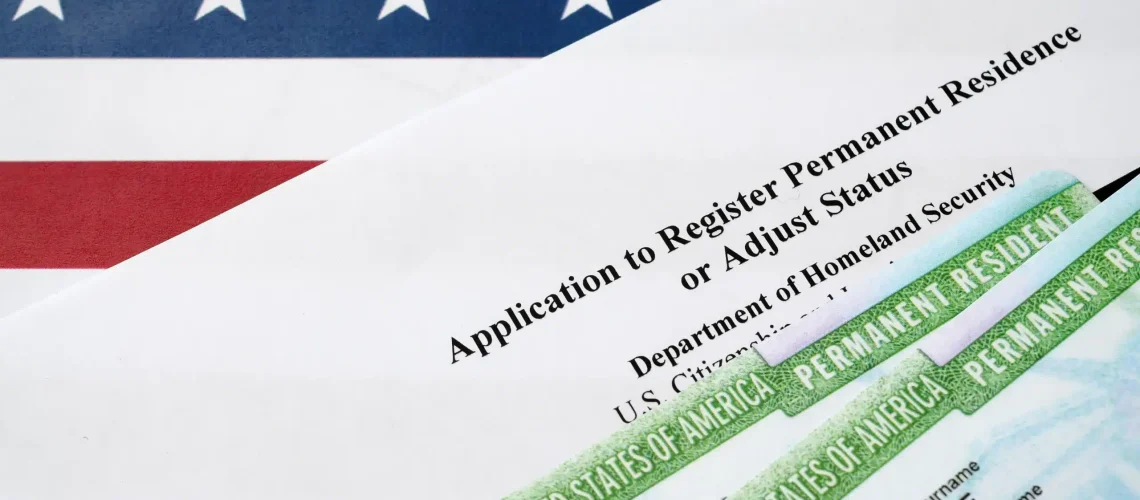
Adjustment of Status is the legal procedure that allows certain foreign nationals already present in the United States to apply for lawful permanent resident status without returning to their home country for consular processing. This pathway is codified under Section 245 of the Immigration and Nationality Act and centers on Form I-485, Application to Register Permanent Residence or Adjust Status.
The fundamental distinction between adjustment of status and consular processing lies in where you complete the final stages of your green card application. If you qualify for adjustment, you remain in the United States throughout the entire process, attend your biometrics appointment and interview domestically, and receive your permanent resident card while residing here. Consular processing, by contrast, requires you to attend an immigrant visa interview at a U.S. consulate or embassy abroad.
Not every foreign national present in the United States qualifies for adjustment of status. To be eligible, you must have an approved immigrant petition (such as an I-130 family petition or I-140 employment petition), have an immigrant visa immediately available to you, be admissible to the United States, and have been inspected and admitted or paroled into the country. This last requirement is particularly important: individuals who entered without inspection generally cannot adjust status, with limited exceptions for immediate relatives of U.S. citizens. In Brooklyn and throughout New York, many applicants qualify through marriage to a U.S. citizen, employment sponsorship, or family-based petitions filed by permanent resident parents or siblings.
Essential Eligibility Criteria and Documentary Evidence You Must Provide
Meeting the eligibility requirements for adjustment of status demands careful attention to multiple legal criteria. Beyond the foundational requirements discussed previously, you must demonstrate that you are not inadmissible under any grounds listed in Section 212(a) of the Immigration and Nationality Act. Common inadmissibility grounds include certain criminal convictions, immigration violations, health-related issues, and prior unlawful presence in the United States.
The documentary requirements for Form I-485 are substantial and require thorough preparation. You must submit a copy of your birth certificate with certified English translation, a copy of your passport biographical page, two passport-style photographs meeting USCIS specifications, and Form I-693 (Report of Medical Examination and Vaccination Record) completed by a USCIS-designated civil surgeon. In Brooklyn, numerous civil surgeons are authorized to perform these examinations, and it is advisable to schedule this appointment early in your preparation process, as medical forms remain valid for specific time periods.
Financial documentation constitutes another critical component. Most family-based applicants must submit Form I-864, Affidavit of Support, demonstrating that their sponsoring relative meets income requirements at 125 percent of the federal poverty guidelines. This requires recent tax transcripts, W-2 forms, pay stubs, and evidence of assets if income alone is insufficient. Employment-based applicants may need to provide employment verification letters and evidence of job offers. Additionally, if you have ever been arrested or convicted of any offense, you must obtain certified copies of all court dispositions and police certificates, even if charges were dismissed or expunged. Many applicants in New York benefit from consulting an immigration attorney early to ensure all documentation is complete and properly certified before filing.
Completing and Submitting Your I-485 Application Package Correctly
Form I-485 itself is a detailed, multi-page document that requires accurate and complete responses to questions about your immigration history, employment, family relationships, criminal history, and eligibility for permanent residence. The form has been updated multiple times, and you must use the current edition accepted by USCIS. As of 2026, the form includes sections on your biographic information, your basis for eligibility, your immigration history including all prior entries to the United States, and detailed questions about inadmissibility grounds.
When preparing your application package, organization is paramount. USCIS recommends arranging documents in a specific order: Form I-485 on top, followed by supporting evidence organized by category. Include a cover letter listing all enclosed forms and documents, though this is not required. The filing fee as of 2026 includes the base I-485 fee, biometrics fee, and any applicable additional fees depending on your age and basis of eligibility. Fee waivers are available in limited circumstances for certain applicants who demonstrate inability to pay.
The filing location depends on your specific circumstances. Most family-based and employment-based adjustment applications are now filed at USCIS Lockbox facilities, which then forward your case to the appropriate service center. Applications filed from Brooklyn and the New York metropolitan area are typically processed by the National Benefits Center, though interview scheduling occurs through the local field office. After filing, you will receive Form I-797C, Notice of Action, confirming receipt of your application. This receipt notice includes your case number, which you will use to track your case status online. Processing times vary significantly: as of 2026, adjustment cases in the New York jurisdiction may take anywhere from ten months to over two years depending on case complexity and volume. During this period, you may apply for interim benefits including employment authorization (Form I-765) and advance parole travel permission (Form I-131), both of which can be filed concurrently with your I-485.
Preparing for Your Immigration Interview and Security Clearance Process
The adjustment of status interview is a critical milestone in your application process. USCIS will mail you Form I-797, Notice of Action, scheduling your interview at the local field office. For applicants in Brooklyn, interviews are typically conducted at the USCIS New York City Field Office or other designated locations in the metropolitan area. The notice will specify the date, time, location, and documents you must bring to the interview.
Interview preparation requires gathering original documents to verify copies submitted with your application. You must bring your current passport, government-issued identification, birth certificate, and all documents related to your basis of eligibility. For marriage-based cases, this includes your marriage certificate, evidence of bona fide marriage (joint leases, bank statements, photographs together, insurance documents), and proof of termination of any prior marriages. Employment-based applicants should bring employment verification letters and recent pay stubs. You must also bring any documents received from USCIS related to your case.
During the interview, the USCIS officer will verify your identity, review your application for accuracy, and ask questions under oath about your eligibility. For marriage-based applications, both spouses must attend and may be interviewed separately to verify the authenticity of the relationship. The officer may ask about how you met, your daily routines, your home, your finances, and future plans. Answers should be truthful, direct, and consistent with your written application.
Concurrently with your interview process, USCIS conducts extensive background and security checks. These include FBI fingerprint checks, name checks against law enforcement and intelligence databases, and sometimes additional administrative processing. Background checks can occasionally delay cases, particularly if you have a common name or prior international travel to certain countries. Most applicants in Brooklyn experience standard processing, but complex cases may require additional time for security clearance completion.
Avoiding Costly Mistakes and How Legal Representation Strengthens Your Case
Many adjustment of status applications encounter avoidable complications due to common errors. One frequent mistake is filing prematurely before an immigrant visa number becomes available, particularly for family preference categories with significant backlogs. Another serious error is failing to disclose prior immigration violations, criminal history, or misrepresentations on prior applications. USCIS has access to extensive databases, and undisclosed information discovered during background checks will result in denial and potential removal proceedings. Incomplete financial documentation on the Affidavit of Support is another common deficiency that triggers Requests for Evidence and delays adjudication.
For marriage-based cases, insufficient evidence of a bona fide marital relationship poses significant risk. USCIS scrutinizes these applications carefully to detect fraudulent marriages entered solely for immigration benefit. Applicants must present compelling, detailed evidence spanning the duration of their relationship. Additionally, applicants who have accrued unlawful presence, worked without authorization, or violated status conditions may face inadmissibility bars that require waivers, adding complexity and time to the process.
This is where consulting with an experienced immigration attorney becomes invaluable. A knowledgeable immigration lawyer can evaluate your eligibility before filing, identify potential inadmissibility issues, and prepare waiver applications if necessary. Legal counsel ensures that all forms are completed accurately, supporting evidence is thorough and properly organized, and filing strategies are optimized for your specific circumstances. During the interview process, attorney representation provides guidance on preparation and, in some cases, accompaniment to the interview itself.
For individuals in Brooklyn and throughout New York, working with a visa lawyer familiar with local USCIS field office practices and processing patterns offers additional advantages. An attorney who regularly handles cases at the New York field office understands officer expectations, common areas of scrutiny, and effective presentation strategies. Whether your case involves family-based immigration, employment sponsorship, or more complex situations requiring legal analysis, professional legal guidance significantly increases the likelihood of a successful outcome and helps you avoid costly errors that could jeopardize your path to permanent residence.